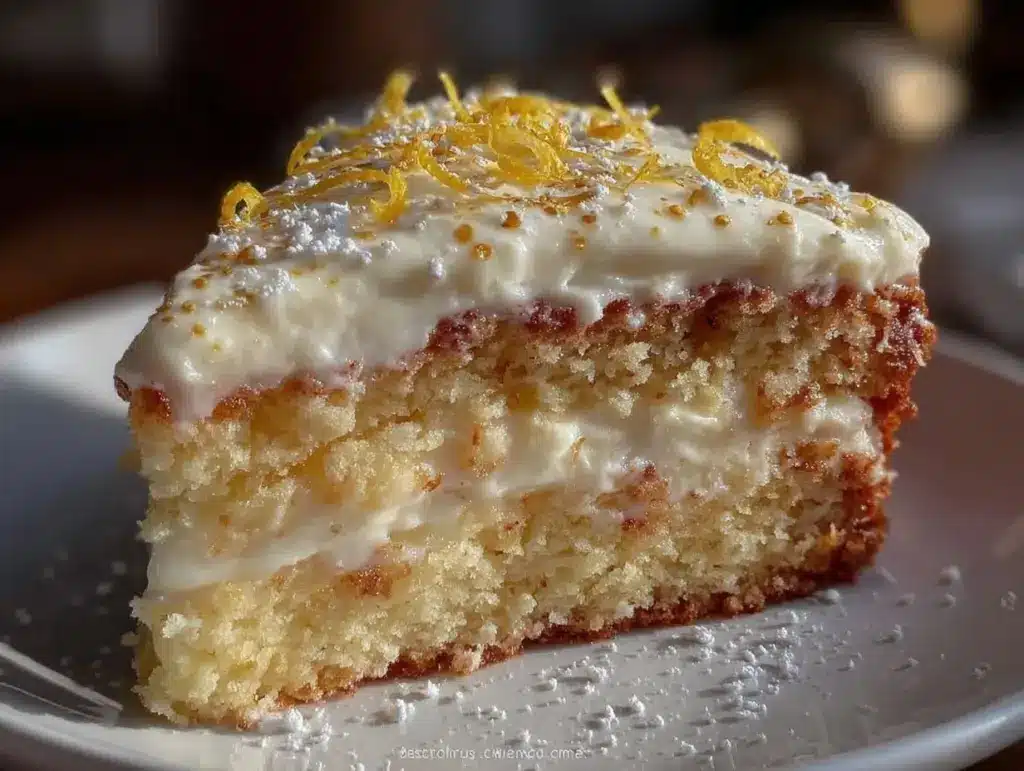
Sunshine lemon cake feels like a burst of daylight in dessert form—bright, tangy, and honestly, a little addictive. I want that moist cake right now, with that dreamy creamy vanilla buttercream slathered on top, and luckily, I have everything on hand except those tiny perfect lemons I always seem to run out of. The zing of lemon zest mingled with the soft crumb of the cake is the kind of treat that sneaks up on you, making you close your eyes just after the first bite. It’s funny how such a simple combination can feel so joyful, like a secret comfort tucked into a slice. I remember last spring, trying to nail down a lemon cake recipe that didn’t dry out or turn too dense, and this one slowly came together after a few kitchen experiments, each time getting more “just right.” That balance of moistness and tang, with that vanilla buttercream so smooth it almost melts before you taste it, is why it stuck with me. Not too sweet, definitely not boring—just a cake that feels like a warm morning sunbeam you can eat. And if I’m honest, it’s become my go-to when I want a slice of happy on a plate without fussing over complicated techniques or rare ingredients.
This recipe is a small reminder that some cakes don’t need bells and whistles, just a good bit of love and the right mix of lemon and vanilla magic. If you’re the type who loves a dessert that’s both refreshing and comforting, this moist sunshine lemon cake with creamy vanilla buttercream might just become your new favorite too.
Why You’ll Love This Recipe
After testing this recipe several times, I can say it hits all the right notes for a lemon cake that’s truly worth making. Here’s why I keep coming back to this one:
- Quick & Easy: From mixing to frosting, it’s ready in under 90 minutes, perfect when you want a no-fuss dessert that still feels special.
- Simple Ingredients: No exotic pantry finds here—just regular flour, fresh lemons, butter, eggs, and the usual suspects. You probably have most of these already.
- Perfect for Any Occasion: Whether it’s a weekend brunch, a casual get-together, or a bright finish to dinner, this cake fits right in.
- Crowd-Pleaser: It consistently gets compliments from both kids and adults, which is no small feat in my experience.
- Unbelievably Delicious: The moist crumb and the creamy vanilla buttercream make a combo that’s both tangy and sweet, a delightful contrast that feels like comfort food with a fresh twist.
What makes this recipe different from the rest is the little trick of zesting both the lemon peel and adding a bit of fresh lemon juice into the batter and the frosting. That keeps the flavor bright but balanced, not overpowering. The buttercream uses real vanilla bean paste for an authentic, deep flavor that’s richer than just extract. Honestly, blending the butter and sugar long enough until it’s fluffy is where the magic starts. This cake isn’t just good—it’s the kind that makes you pause and savor, maybe even wish you had a second slice stashed away for later.
It’s a recipe that feels both classic and fresh, perfect for impressing guests without stress, or just treating yourself to a little sunshine on a plate.
What Ingredients You Will Need
This recipe uses simple, wholesome ingredients to deliver bold flavor and satisfying texture without the fuss. Most are pantry staples, with fresh lemons taking center stage to give that unmistakable tang.
- For the Cake Batter:
- All-purpose flour – 2 ½ cups (320g), sifted for lightness
- Baking powder – 2 ½ teaspoons, to help the cake rise beautifully
- Salt – ½ teaspoon, to balance the sweetness
- Unsalted butter – 1 cup (227g), softened (I prefer Kerrygold for rich flavor)
- Granulated sugar – 1 ¾ cups (350g), for that perfect sweetness
- Large eggs – 4, at room temperature (this helps with emulsification)
- Whole milk – 1 cup (240ml), room temp (can substitute with buttermilk for extra tang)
- Lemon zest – from 2 large lemons, finely grated (adds fresh citrus aroma)
- Lemon juice – ¼ cup (60ml), freshly squeezed (never bottled for best punch)
- Pure vanilla extract – 1 teaspoon, to round out the flavors
- For the Creamy Vanilla Buttercream:
- Unsalted butter – 1 cup (227g), softened
- Powdered sugar – 4 cups (480g), sifted for smoothness
- Whole milk – 2 tablespoons (30ml), or as needed for consistency
- Pure vanilla bean paste – 1 tablespoon (or vanilla extract if not available)
- Pinch of salt, to balance the sweetness
For a gluten-free twist, substitute the all-purpose flour with a quality gluten-free blend like Bob’s Red Mill 1-to-1 baking flour. If dairy is a concern, swap the butter and milk with vegan alternatives like coconut oil and almond milk. Just remember, the freshness of the lemons is key—bright, juicy lemons make all the difference here. If lemons aren’t in season, a bit of lemon zest from the freezer works surprisingly well too.
Equipment Needed
- Two 9-inch (23 cm) round cake pans – non-stick or lined with parchment paper for easy release
- Electric mixer or stand mixer – for creaming butter and sugar smoothly
- Mixing bowls – medium and large sizes for separate dry and wet ingredients
- Zester or microplane – for finely grating lemon zest
- Citrus juicer – helpful but not essential; you can squeeze by hand
- Rubber spatula – perfect for folding and scraping the bowl clean
- Cooling racks – to let the cakes cool evenly without sogginess
If you don’t have a stand mixer, an electric hand mixer works just fine. When it comes to cake pans, I’ve had success with budget-friendly aluminum pans and pricier heavy-gauge versions alike—just line them well and grease the sides. For zesting, a microplane is my favorite tool because it captures the zest without the bitter white pith. Keeping your butter soft but not melted is a small but crucial detail I learned the hard way; too warm and your batter can break.
Preparation Method
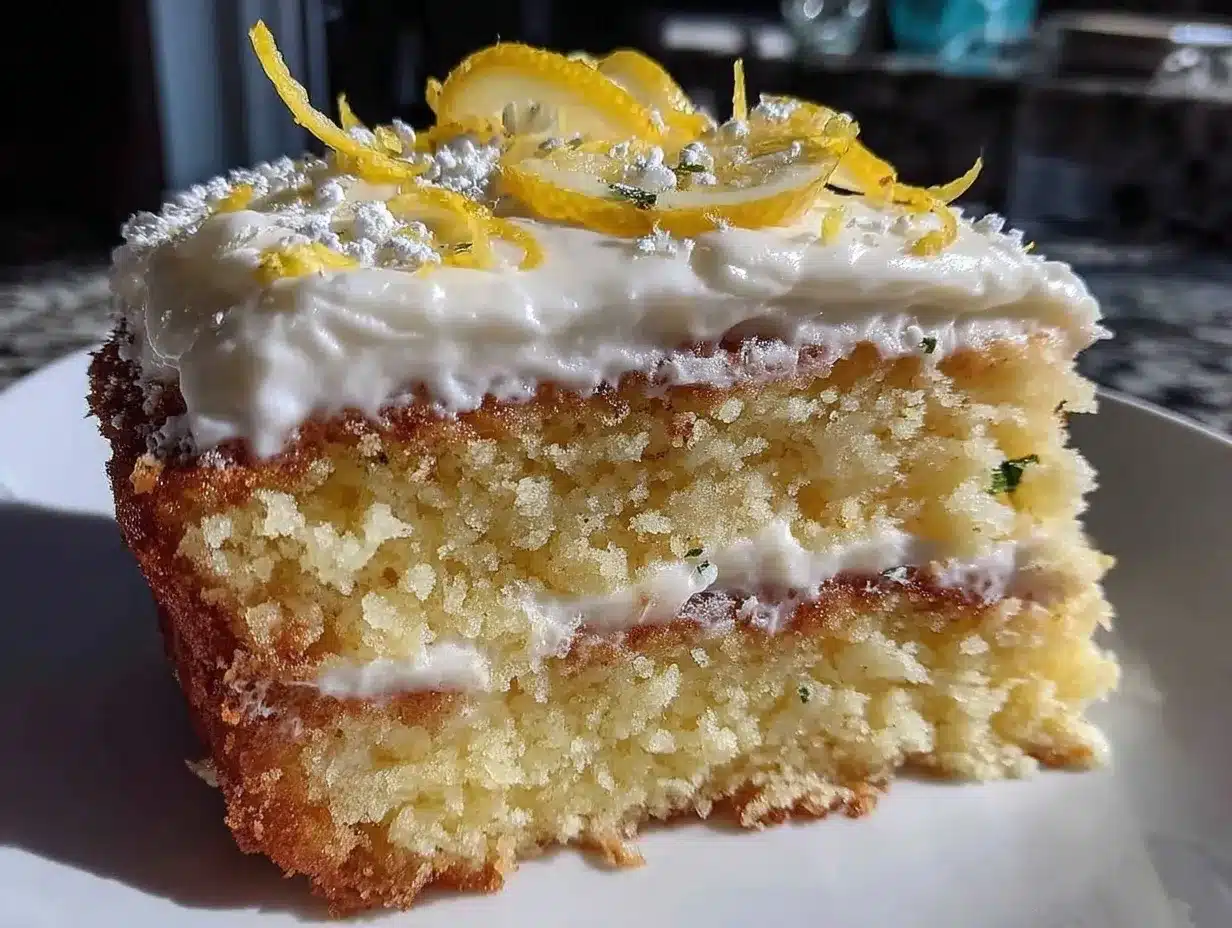
- Preheat and prep pans: Set your oven to 350°F (175°C). Grease two 9-inch cake pans and line the bottoms with parchment rounds. This prevents sticking and helps the cakes release cleanly. Estimated time: 10 minutes.
- Mix dry ingredients: In a medium bowl, whisk together the sifted flour, baking powder, and salt. This ensures even distribution of leavening agents and prevents clumps. Estimated time: 5 minutes.
- Cream butter and sugar: Using your mixer on medium speed, beat the softened butter and granulated sugar until pale and fluffy, about 3-5 minutes. This step traps air, crucial for a light crumb. Be patient here—it’s worth it. Estimated time: 5 minutes.
- Add eggs: Crack in the eggs one at a time, beating well after each addition. This helps emulsify the mixture. If the batter looks curdled, don’t panic—it’ll come back together once you add the dry ingredients. Estimated time: 3 minutes.
- Incorporate lemon and vanilla: Stir in the lemon zest, lemon juice, and vanilla extract. The batter should smell bright and fresh now. Estimated time: 1-2 minutes.
- Alternate adding dry ingredients and milk: With the mixer on low, add the dry ingredients in three parts, alternating with milk in two parts (start and end with dry). Mix just until combined after each addition to avoid overworking the batter. The texture should be smooth and thick but pourable. Estimated time: 5-7 minutes.
- Divide and bake: Pour batter evenly into prepared pans. Tap pans gently on the counter to release air bubbles. Bake in the preheated oven for 30-35 minutes or until a toothpick inserted in the center comes out clean. Rotate pans halfway through baking for even color. Estimated time: 35 minutes.
- Cool completely: Let cakes cool in pans for 10 minutes, then turn out onto cooling racks. Cooling fully before frosting is key to prevent melting. Estimated time: 1 hour.
- Make the vanilla buttercream: Beat softened butter on medium speed until creamy, about 2 minutes. Gradually add sifted powdered sugar, alternating with milk, until smooth and spreadable. Stir in vanilla bean paste and a pinch of salt. If frosting feels too stiff, add more milk, one teaspoon at a time. Estimated time: 10 minutes.
- Assemble the cake: Place one cake layer on your serving plate. Spread a generous layer of buttercream on top, then add the second layer. Frost the top and sides with remaining buttercream, smoothing or swirling as you like. Chill briefly if the frosting softens too much. Estimated time: 15 minutes.
If your cake starts to brown too fast, tent it loosely with foil. Also, don’t skip leveling the cake layers if they domed too much; a serrated knife or cake leveler makes the frosting layer even and neat. I’ve found that letting the batter rest for 5 minutes before baking helps the lemon flavor develop more, though I usually skip this step when in a rush.
Cooking Tips & Techniques
Getting this lemon cake just right means paying attention to a few details I’ve learned from trial and error over the years. For example, creaming your butter and sugar thoroughly is non-negotiable if you want a tender, airy crumb. I once rushed this step and ended up with a dense cake—lesson learned!
Don’t overmix once you add the flour. Overworking the batter develops gluten, which leads to toughness. A few lumps are fine; they usually bake out.
Room temperature ingredients blend better. Cold eggs or milk can cause the batter to curdle, but gently mixing usually smooths it back out.
When zesting lemons, avoid the white pith underneath—it’s bitter and can throw off the delicate balance. I always zest with a microplane and then check carefully.
Timing is everything. Baking too long dries the cake out, but underbaking leaves it gummy. Test doneness with a toothpick but also trust your nose—the kitchen should smell like fresh citrus and vanilla.
When frosting, if your buttercream seems too soft, pop it in the fridge for 10-15 minutes, then whip again briefly. This trick saves me on humid days.
Multitasking tip: While the cake bakes, prepare your buttercream and clean up. That way, once the layers cool, you’re ready to assemble without delay.
Variations & Adaptations
This moist sunshine lemon cake recipe is versatile enough for several delicious twists:
- Berry Lemon Twist: Fold in ½ cup fresh blueberries or raspberries into the batter before baking for a fruity surprise. I love this with a scoop of vanilla bean ice cream on the side.
- Gluten-Free Version: Swap the all-purpose flour for a gluten-free baking blend. Adding a teaspoon of xanthan gum can help with structure if your blend doesn’t already contain it.
- Lightened-Up Cake: Use Greek yogurt instead of butter and reduce sugar by ¼ cup for a tangier, slightly healthier cake that still feels indulgent.
- Alternative Frosting: Try a whipped cream cheese frosting for a tangier finish that pairs wonderfully with the lemon. Just blend 8 ounces of cream cheese with ½ cup butter and powdered sugar until fluffy.
- Mini Cake or Cupcakes: Bake the batter in lined cupcake tins for about 18-22 minutes. This is my go-to when I want single servings to bring to a summer party or picnic.
Last summer, I swapped in some fresh basil into the batter for a subtle herbaceous note, inspired by a basil-infused nectarine caprese recipe. It was unexpectedly good and a nice way to impress guests with minimal effort.
Serving & Storage Suggestions
This cake tastes best at room temperature, allowing the buttercream to be soft and luscious. I like serving it with a hot cup of tea or a chilled glass of sparkling lemonade for a double citrus treat.
For a more decadent presentation, dust the top with a light sprinkle of powdered sugar and garnish with thin lemon slices or edible flowers.
Store leftover cake covered tightly in the refrigerator for up to 4 days. Bring slices to room temperature before serving to soften the buttercream. You can also freeze unfrosted cake layers wrapped in plastic wrap and foil for up to 3 months; thaw overnight in the fridge before frosting.
The lemon flavor seems to mellow and deepen after a day, making it even more enjoyable the next day.
If you want a dessert that pairs well alongside, try serving it after a light summer salad or alongside a fresh peach dessert like the caramelized peach upside-down cake for a crowd-pleasing summer spread.
Nutritional Information & Benefits
Each slice of this cake (serving size: 1/12 of the cake) roughly contains 350 calories, 18g of fat, 45g of carbohydrates, and 4g of protein. The lemon juice and zest provide a boost of vitamin C and antioxidants, making this dessert a slightly brighter choice than richer, heavier cakes.
The recipe uses real butter and whole milk for flavor and texture, which means it’s best enjoyed in moderation but offers satisfying richness without artificial additives.
For those watching carbs or gluten, the adaptations mentioned earlier allow this cake to fit into various dietary needs without sacrificing flavor. Just note the buttercream contains dairy and sugar, so consider alternatives if you have allergies.
From a wellness perspective, this cake feels like a treat that doesn’t overstay its welcome—it’s bright, fresh, and balanced, making it easier to enjoy guilt-free on special occasions.
Conclusion
This moist sunshine lemon cake with creamy vanilla buttercream is one of those rare recipes that feels both simple and special. I love how it captures the essence of fresh lemons in every bite, paired with a frosting that’s smooth, sweet, and just a little bit dreamy. It’s a recipe you can tweak and make your own, whether you want to add berries, go gluten-free, or turn it into cupcakes. The ease and freshness keep me coming back, even on busy days when I want a little sunshine without the fuss. I hope you find the same quiet joy in baking and sharing this cake as I have.
If you try it out, I’d love to hear how you make it your own—drop a comment or share your tweaks. Baking is better when it’s shared, right? Here’s to bright flavors and happy slices ahead!
FAQs
Can I use bottled lemon juice instead of fresh?
Fresh lemon juice is best for bright flavor, but bottled lemon juice works in a pinch. Just make sure it’s 100% lemon juice with no added sugars or preservatives.
How do I keep the cake moist if I need to bake it ahead?
Wrap cooled cake layers tightly in plastic wrap and store at room temperature for up to 2 days or freeze for longer. Avoid refrigeration before frosting as it can dry the cake out.
What’s the best way to level the cake layers?
Use a serrated knife or a cake leveler to trim off any domed tops. A flat surface helps with even frosting and stacking.
Can I make the buttercream dairy-free?
Yes, substitute butter with a plant-based margarine or coconut oil and use a dairy-free milk like almond or oat milk. The texture may vary slightly but still delicious.
How long can I store leftovers in the freezer?
Unfrosted cake layers freeze well for up to 3 months. Wrap tightly in plastic and foil. Thaw overnight in the fridge before frosting and serving.
Pin This Recipe!
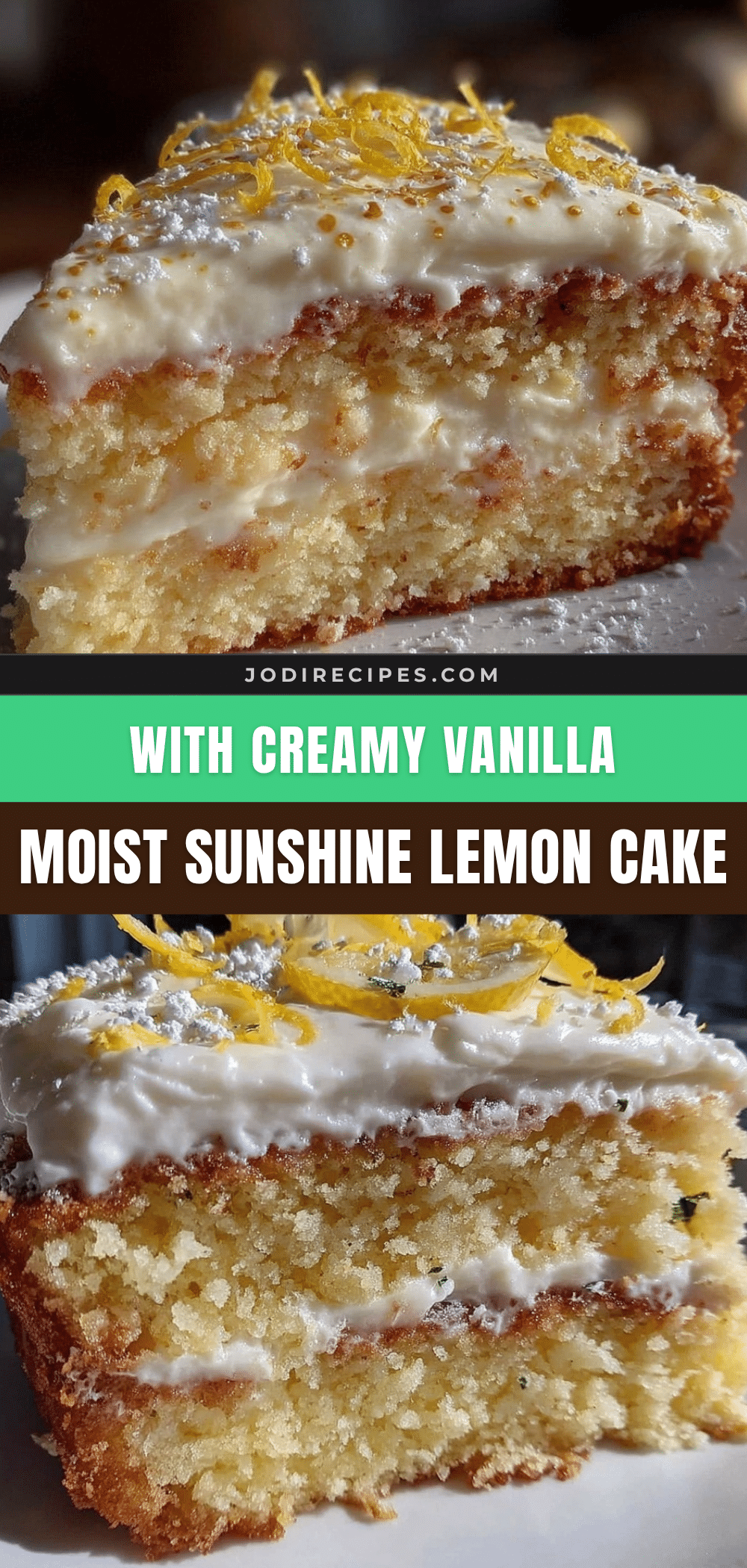
Moist Sunshine Lemon Cake Recipe with Easy Creamy Vanilla Buttercream

A bright, tangy, and moist lemon cake paired with a smooth and dreamy creamy vanilla buttercream. Perfect for any occasion, this cake balances fresh lemon zest and juice with a luscious vanilla frosting.
- Prep Time: 20 minutes
- Cook Time: 35 minutes
- Total Time: 1 hour 15 minutes
- Yield: 12 servings 1x
- Category: Dessert
- Cuisine: American
Ingredients
- 2 ½ cups (320g) all-purpose flour, sifted
- 2 ½ teaspoons baking powder
- ½ teaspoon salt
- 1 cup (227g) unsalted butter, softened
- 1 ¾ cups (350g) granulated sugar
- 4 large eggs, room temperature
- 1 cup (240ml) whole milk, room temperature
- Zest of 2 large lemons
- ¼ cup (60ml) freshly squeezed lemon juice
- 1 teaspoon pure vanilla extract
- For the Buttercream:
- 1 cup (227g) unsalted butter, softened
- 4 cups (480g) powdered sugar, sifted
- 2 tablespoons (30ml) whole milk, or as needed
- 1 tablespoon pure vanilla bean paste (or vanilla extract)
- Pinch of salt
Instructions
- Preheat oven to 350°F (175°C). Grease two 9-inch cake pans and line bottoms with parchment paper.
- In a medium bowl, whisk together sifted flour, baking powder, and salt.
- Using a mixer on medium speed, beat softened butter and granulated sugar until pale and fluffy, about 3-5 minutes.
- Add eggs one at a time, beating well after each addition.
- Stir in lemon zest, lemon juice, and vanilla extract.
- With mixer on low, add dry ingredients in three parts, alternating with milk in two parts, starting and ending with dry ingredients. Mix just until combined.
- Divide batter evenly between prepared pans. Tap pans gently to release air bubbles.
- Bake for 30-35 minutes or until a toothpick inserted in the center comes out clean. Rotate pans halfway through baking.
- Cool cakes in pans for 10 minutes, then turn out onto cooling racks to cool completely.
- For the buttercream, beat softened butter on medium speed until creamy, about 2 minutes.
- Gradually add sifted powdered sugar, alternating with milk, until smooth and spreadable.
- Stir in vanilla bean paste and a pinch of salt. Add more milk if frosting is too stiff.
- Assemble cake by placing one layer on a serving plate, spreading buttercream on top, then adding second layer.
- Frost top and sides with remaining buttercream. Chill briefly if frosting softens too much.
Notes
Use fresh lemons for best flavor; bottled lemon juice can be used in a pinch but avoid added sugars. Do not overmix batter after adding flour to prevent toughness. Keep butter softened but not melted for best creaming results. If buttercream is too soft, chill and re-whip. Let cake cool completely before frosting to prevent melting.
Nutrition
- Serving Size: 1 slice (1/12 of cak
- Calories: 350
- Fat: 18
- Carbohydrates: 45
- Protein: 4
Keywords: lemon cake, vanilla buttercream, moist cake, lemon dessert, easy cake recipe, lemon zest, creamy frosting