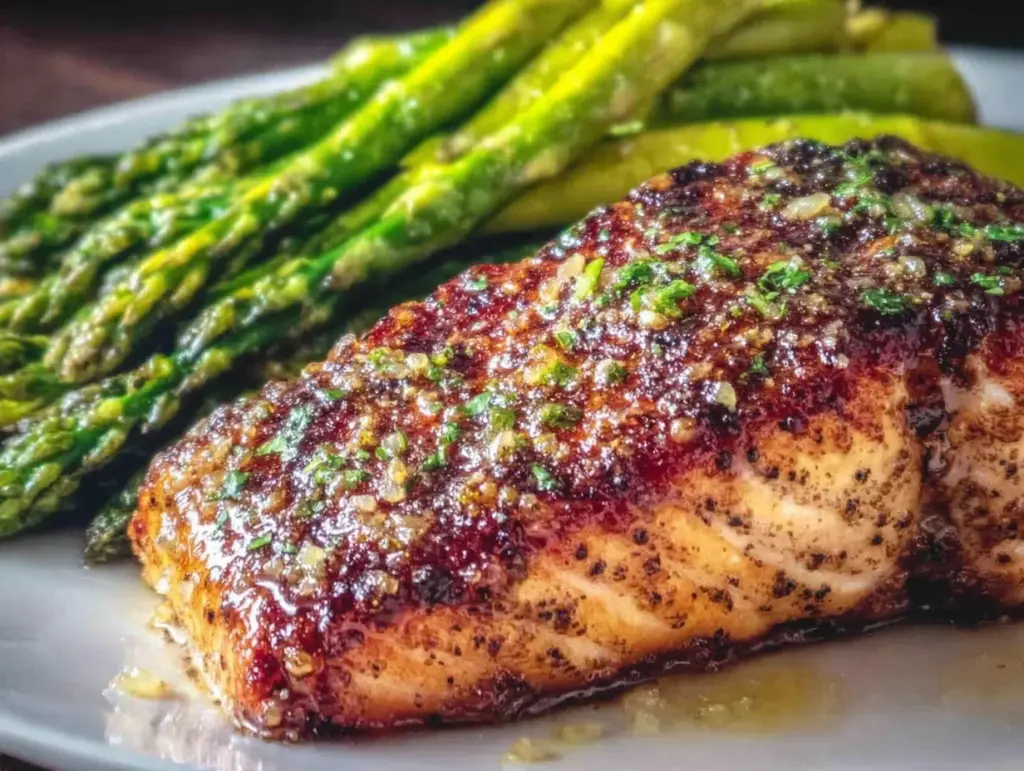
“You won’t believe this came from a mix-up in my kitchen,” my friend Matt told me last Thursday evening as we gathered for our usual midweek catch-up. I was already half-distracted by the buzzing sound of my old blender, which had just sputtered out its last breath. While I was fumbling to clean up, Matt started talking about this ridiculously simple salmon dish he whipped up after grabbing the wrong mustard jar. Honestly, I was skeptical — mustard and honey? That combo sounded like a strange dare rather than dinner.
But then he brought out the Easy Honey Dijon Glazed Salmon with Asparagus, and all doubts vanished. The glaze was sweet but tangy, with a hint of warmth from the Dijon that balanced the buttery salmon perfectly. Plus, the asparagus was cooked just right – tender with that slight snap that makes every bite feel fresh and lively. That night, the recipe stuck with me, not just because it tasted great but because it was so easy to throw together after a long day (and hey, I’d forgotten to thaw anything ahead of time).
Maybe you’ve been there — staring into your fridge, tired, hungry, and wondering if dinner will be a sad sandwich or takeout yet again. This recipe feels like the answer to those nights when you want something impressive but can’t muster up hours in the kitchen. Plus, it’s one of those dishes that tastes like you spent way more time and effort than you actually did. Let me tell you, that’s the kind of kitchen magic we all need once in a while.
Why You’ll Love This Recipe
After trying countless salmon recipes, this Easy Honey Dijon Glazed Salmon with Asparagus stands out for several reasons. It’s a dish that feels fancy but is honestly quite forgiving and fast — perfect for weeknights when time is tight but you want to impress yourself (and maybe your family or guests, too).
- Quick & Easy: Ready in under 30 minutes, making it ideal for busy evenings or last-minute dinner plans.
- Simple Ingredients: No exotic or hard-to-find items here — honey, Dijon mustard, fresh salmon, and asparagus are probably already in your kitchen or local store.
- Perfect for Dinner: Whether it’s a cozy night for two or a small gathering, this recipe hits the right note every time.
- Crowd-Pleaser: The sweet-tangy glaze complements the rich salmon in a way that appeals to both kids and adults.
- Unbelievably Delicious: The glaze caramelizes just enough to give a lovely texture contrast, while the asparagus adds that fresh, green crunch.
What makes this version different? Well, the magic lies in the glaze’s perfectly balanced ratio — not too sweet, not too sharp. I’ve experimented with thicker glazes and heavier mustard doses, but this balance lets the salmon’s natural flavor shine through while still giving you that irresistible coating. Plus, roasting the asparagus alongside the salmon saves time and infuses the veggies with subtle glaze notes.
Honestly, this recipe isn’t just about the taste; it’s about the warm, satisfying feeling you get after a meal that looks and tastes like a treat but didn’t wreck your evening. Once you try it, you’ll keep coming back — I know I do.
What Ingredients You Will Need
This recipe uses simple, wholesome ingredients to deliver bold flavor and satisfying texture without the fuss. Most are pantry staples or fresh produce you can find year-round. Here’s what you’ll need:
- Salmon Fillets – 4 pieces, skin-on, about 6 ounces (170 g) each. I prefer wild-caught when possible for flavor and sustainability.
- Asparagus – 1 bunch (about 1 pound or 450 g), trimmed. Fresh, firm stalks work best; avoid limp or woody ends.
- Honey – 3 tablespoons. I recommend a mild wildflower honey for natural sweetness without overpowering the mustard.
- Dijon Mustard – 2 tablespoons. Grey Poupon is a classic choice that gives just the right kick.
- Olive Oil – 2 tablespoons, plus extra for drizzling the asparagus. Use extra virgin for best flavor.
- Garlic – 2 cloves, minced. Adds a subtle savory depth to the glaze.
- Lemon Juice – 1 tablespoon, freshly squeezed. Brightens the glaze and balances the honey’s sweetness.
- Salt and Pepper – To taste. Freshly ground black pepper works wonders here.
- Optional Garnishes: Fresh thyme or parsley for a pop of color and fresh herbal notes.
If you want to swap things up, you can use maple syrup instead of honey or whole grain mustard in place of Dijon for a bit of texture and a different flavor profile. For a dairy-free and paleo-friendly version, just stick to the base ingredients, as this recipe is naturally free of dairy and gluten.
Equipment Needed
- Baking Sheet: A rimmed baking sheet large enough to hold the salmon and asparagus side-by-side.
- Parchment Paper or Silicone Baking Mat: For easier cleanup and to prevent sticking.
- Mixing Bowl: To whisk together the honey Dijon glaze.
- Measuring Spoons: For precise honey, mustard, and lemon juice amounts.
- Sharp Knife: For trimming asparagus and prepping the salmon if needed.
- Tongs or Spatula: Useful for turning asparagus or salmon during cooking if necessary.
If you don’t have a baking sheet, you can use a large oven-safe skillet or roasting pan. I’ve also tried this on a grill pan with great results — just watch the cooking time closely. For cleanup, parchment paper is a lifesaver, especially when the glaze gets sticky. And if you don’t own a silicone mat, a light brush of olive oil will do the trick.
Preparation Method
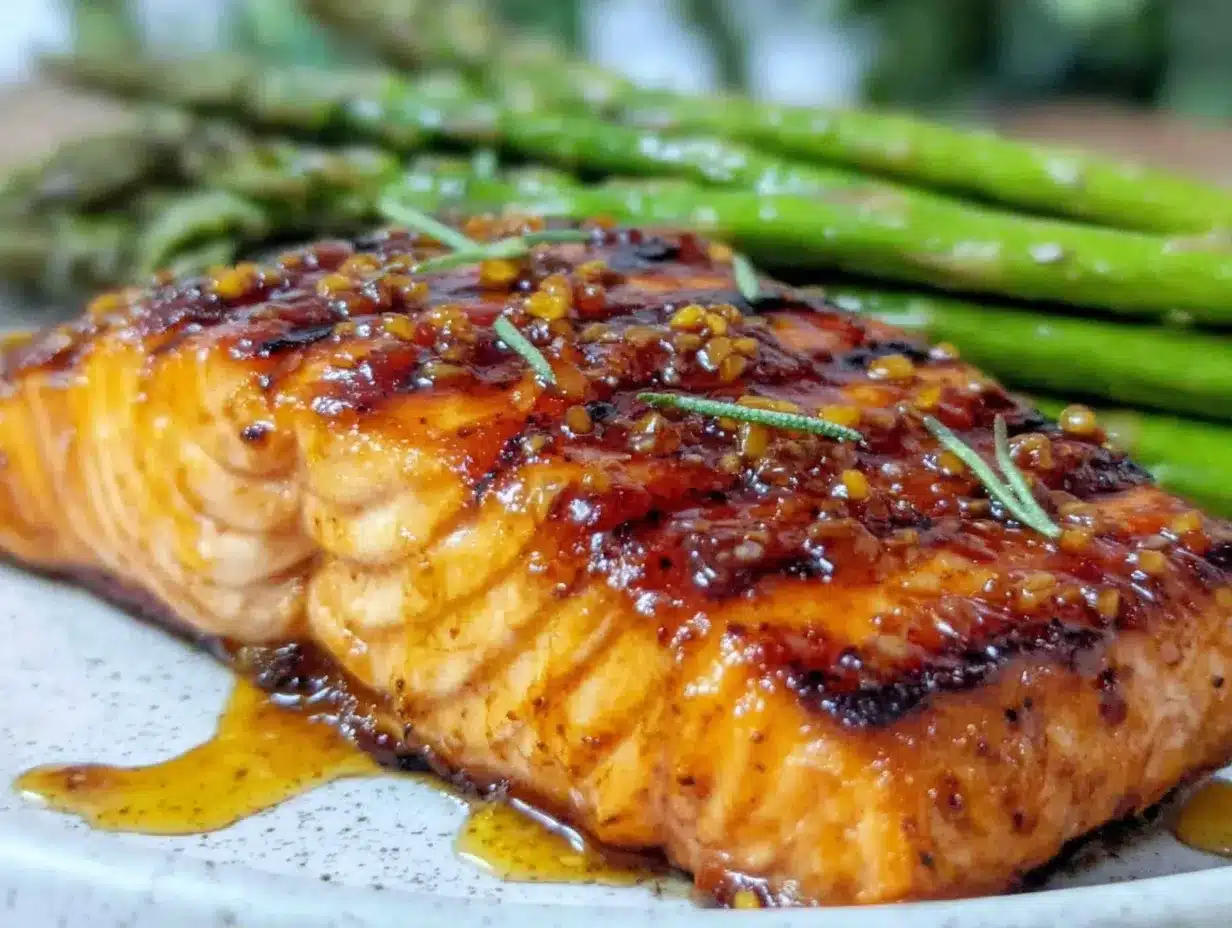
- Preheat your oven to 400°F (200°C). Line a baking sheet with parchment paper or a silicone mat to keep things neat and prevent sticking.
- Prepare the glaze: In a mixing bowl, whisk together 3 tablespoons honey, 2 tablespoons Dijon mustard, 2 tablespoons olive oil, 2 minced garlic cloves, and 1 tablespoon fresh lemon juice. Add a pinch of salt and freshly ground black pepper. Taste it — it should be balanced with a little tang and sweetness.
- Prepare the salmon: Pat the salmon fillets dry with paper towels. This helps the glaze stick and encourages browning. Place the fillets skin-side down on one side of the prepared baking sheet.
- Trim the asparagus: Snap off or cut the tough, woody ends of the asparagus and arrange the stalks on the other side of the baking sheet. Drizzle with a little olive oil and season lightly with salt and pepper. Toss gently to coat.
- Glaze the salmon: Spoon or brush the honey Dijon mixture evenly over the top of each salmon fillet. Don’t be shy — the glaze is the star here.
- Roast in the oven: Place the baking sheet on the middle rack and roast for about 12-15 minutes. The timing depends on your salmon’s thickness; aim for an internal temperature of 125-130°F (52-54°C) for medium doneness. The asparagus should be tender yet still crisp.
- Optional broil for caramelization: If you like a slightly caramelized glaze, switch your oven to broil for the last 2 minutes. Keep a close eye to avoid burning — that thin layer of honey can go from golden to charred fast.
- Remove and rest: Take the baking sheet out and let the salmon rest for 3-5 minutes. This short rest lets the juices redistribute and the glaze set.
- Serve: Plate the salmon with the roasted asparagus. Garnish with fresh thyme or parsley if using, and maybe a lemon wedge on the side.
Quick tip: If your garlic starts to brown too fast or you notice uneven cooking, rotate the baking sheet halfway through. I once forgot that step and ended up with one sad burnt edge — not my proudest moment! Also, avoid overcooking the salmon; it continues to cook a bit while resting.
Cooking Tips & Techniques
Getting this Easy Honey Dijon Glazed Salmon with Asparagus just right is easier than you think, but a few tricks go a long way.
- Pat salmon dry: Moisture is the enemy of a good glaze, so drying the fillets before glazing helps the honey mustard cling and caramelize nicely.
- Don’t overdo the mustard: Too much Dijon can overpower the salmon’s delicate flavor. Stick to the recipe’s amounts for harmony.
- Watch the oven temperature: 400°F (200°C) is a sweet spot for roasting salmon and asparagus together without drying out the fish or turning the veggies to mush.
- Use fresh lemon juice: Bottled lemon juice just doesn’t have the same brightness that fresh squeezed adds.
- Timing is key: Salmon cooks quickly; check at 12 minutes and test for doneness with a fork. It should flake easily but still look moist.
- Roasting asparagus: Don’t overcrowd the pan. Give the stalks room to roast properly — overcrowding leads to steaming instead of roasting.
- Rest before serving: Letting the salmon rest ensures juicy flakes and lets the glaze thicken slightly.
From personal experience, I once tried glazing the salmon too early and the honey burnt. Lesson learned: glaze just before roasting. Also, prepping the glaze ahead of time helps streamline the process, especially when you’re juggling other dinner tasks.
Variations & Adaptations
This recipe is versatile, so feel free to switch things up based on your preferences or pantry contents.
- Spicy twist: Add a pinch of cayenne pepper or a drizzle of Sriracha to the glaze for some heat that balances the honey’s sweetness.
- Gluten-free option: This recipe is naturally gluten-free, but double-check your mustard label if sensitive.
- Different veggies: Swap asparagus for green beans, broccolini, or even thinly sliced zucchini for a seasonal change.
- Cooking methods: If you don’t want to roast, try pan-searing the salmon skin-side down first, then finish with the glaze in the oven or under a broiler.
- Herb variations: Fresh dill or tarragon pairs beautifully with salmon if you want to change the flavor profile.
Once, I tried adding a splash of soy sauce to the glaze for an umami boost — it was unexpectedly good. Just watch the salt levels if you do this. The recipe really welcomes your creativity, so don’t be shy about trying your own spins!
Serving & Storage Suggestions
This Easy Honey Dijon Glazed Salmon with Asparagus is best served hot or warm, right out of the oven. The glaze is sticky and glossy when fresh, and the asparagus retains its crispness.
For presentation, plate the salmon fillet atop or beside the asparagus, drizzle any leftover glaze from the pan over the top, and garnish with fresh herbs and a lemon wedge. A side of light couscous, wild rice, or a simple green salad pairs beautifully.
Leftovers can be stored in an airtight container in the fridge for up to 2 days. Reheat gently in a low oven (around 300°F/150°C) or microwave at low power, taking care not to dry out the fish. The glaze may thicken or darken upon reheating, so a quick squeeze of lemon freshens it nicely.
Flavors meld over time, so if you make this ahead, the salmon will taste even more infused with the honey Dijon goodness the next day. Just beware of overcooking during reheating — salmon can get dry fast!
Nutritional Information & Benefits
Each serving of this Easy Honey Dijon Glazed Salmon with Asparagus provides approximately:
| Nutrient | Amount |
|---|---|
| Calories | 350-400 |
| Protein | 35g |
| Fat | 18g (mostly healthy fats) |
| Carbohydrates | 8g |
| Fiber | 2g |
Salmon is rich in omega-3 fatty acids, which support heart health and brain function. The asparagus adds fiber, vitamins A and C, and antioxidants. Honey and Dijon mustard offer natural sweetness and tang without refined sugars or artificial additives.
This recipe fits well into low-carb and gluten-free diets. Just watch the portion sizes and balance with sides if you’re tracking calories. Personally, I appreciate how it feels wholesome without sacrificing flavor or comfort.
Conclusion
Easy Honey Dijon Glazed Salmon with Asparagus is one of those recipes that makes you feel like a kitchen pro without hours of effort or fancy ingredients. It’s versatile, forgiving, and genuinely delicious — the kind of meal you want to make again and again, especially when life gets busy.
Feel free to tweak the glaze or swap veggies to match your tastes or what’s fresh at the market. Honestly, cooking should be fun and flexible, and this recipe lets you do just that.
Give it a try tonight or save it for a weekend treat. If you do, drop a comment below to share your experience or any creative twists you tried — I’d love to hear how you make this your own. Happy cooking and even happier eating!
Frequently Asked Questions
Can I use frozen salmon for this recipe?
Yes, but make sure to thaw it completely and pat dry before glazing for the best texture and flavor.
How do I know when salmon is cooked through?
Look for flesh that flakes easily with a fork and has an internal temperature around 125-130°F (52-54°C) for medium doneness.
Can I prepare the glaze ahead of time?
Absolutely! The glaze keeps well in the fridge for up to 3 days. Just give it a quick whisk before using.
What can I serve on the side with this dish?
Light grains like couscous, quinoa, or wild rice, as well as simple salads or roasted potatoes, complement the flavors nicely.
Is this recipe suitable for meal prep?
Yes, it reheats well and keeps its flavor. Just store salmon and asparagus separately if possible to maintain texture.
Pin This Recipe!
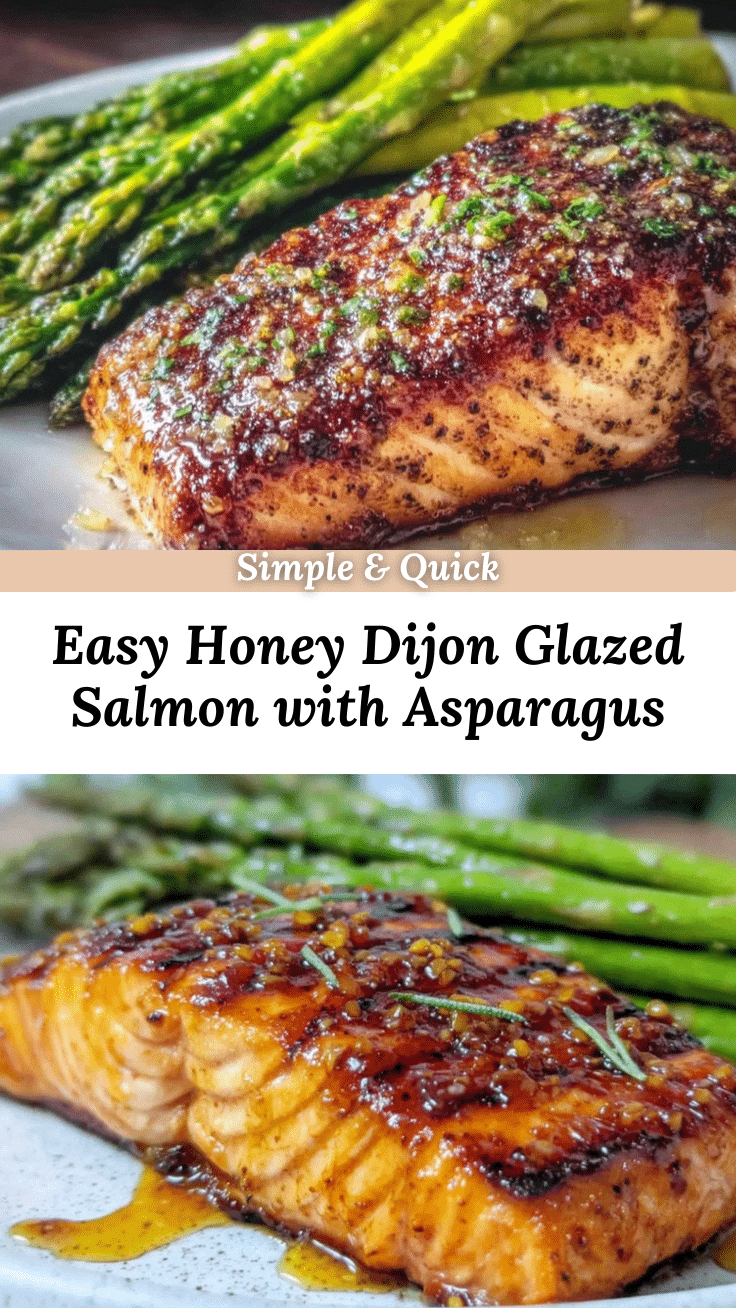
Easy Honey Dijon Glazed Salmon with Asparagus

A quick and easy salmon dish featuring a sweet and tangy honey Dijon glaze paired with perfectly roasted asparagus. Ideal for busy weeknights or last-minute dinners.
- Prep Time: 10 minutes
- Cook Time: 15 minutes
- Total Time: 25 minutes
- Yield: 4 servings 1x
- Category: Main Course
- Cuisine: American
Ingredients
- 4 salmon fillets, skin-on, about 6 ounces each
- 1 bunch asparagus (about 1 pound), trimmed
- 3 tablespoons honey
- 2 tablespoons Dijon mustard
- 2 tablespoons olive oil, plus extra for drizzling asparagus
- 2 cloves garlic, minced
- 1 tablespoon fresh lemon juice
- Salt and freshly ground black pepper to taste
- Optional garnishes: fresh thyme or parsley
Instructions
- Preheat your oven to 400°F (200°C). Line a baking sheet with parchment paper or a silicone mat.
- In a mixing bowl, whisk together honey, Dijon mustard, olive oil, minced garlic, lemon juice, salt, and pepper.
- Pat salmon fillets dry with paper towels and place skin-side down on one side of the baking sheet.
- Trim asparagus and arrange on the other side of the baking sheet. Drizzle with olive oil and season with salt and pepper. Toss gently to coat.
- Brush the honey Dijon glaze evenly over the top of each salmon fillet.
- Roast in the oven for 12-15 minutes until salmon reaches an internal temperature of 125-130°F (52-54°C) and asparagus is tender but crisp.
- Optional: Broil for the last 2 minutes to caramelize the glaze, watching carefully to avoid burning.
- Remove from oven and let salmon rest for 3-5 minutes.
- Serve salmon with roasted asparagus, garnished with fresh thyme or parsley and a lemon wedge if desired.
Notes
Pat salmon dry before glazing to help the glaze stick and caramelize. Avoid overcooking salmon; it continues to cook while resting. Rotate baking sheet halfway through if garlic browns too fast. Optional broil step caramelizes glaze but watch closely to prevent burning.
Nutrition
- Serving Size: 1 salmon fillet with
- Calories: 350400
- Fat: 18
- Carbohydrates: 8
- Fiber: 2
- Protein: 35
Keywords: salmon, honey Dijon glaze, asparagus, quick dinner, easy recipe, healthy, weeknight meal, gluten-free, low-carb