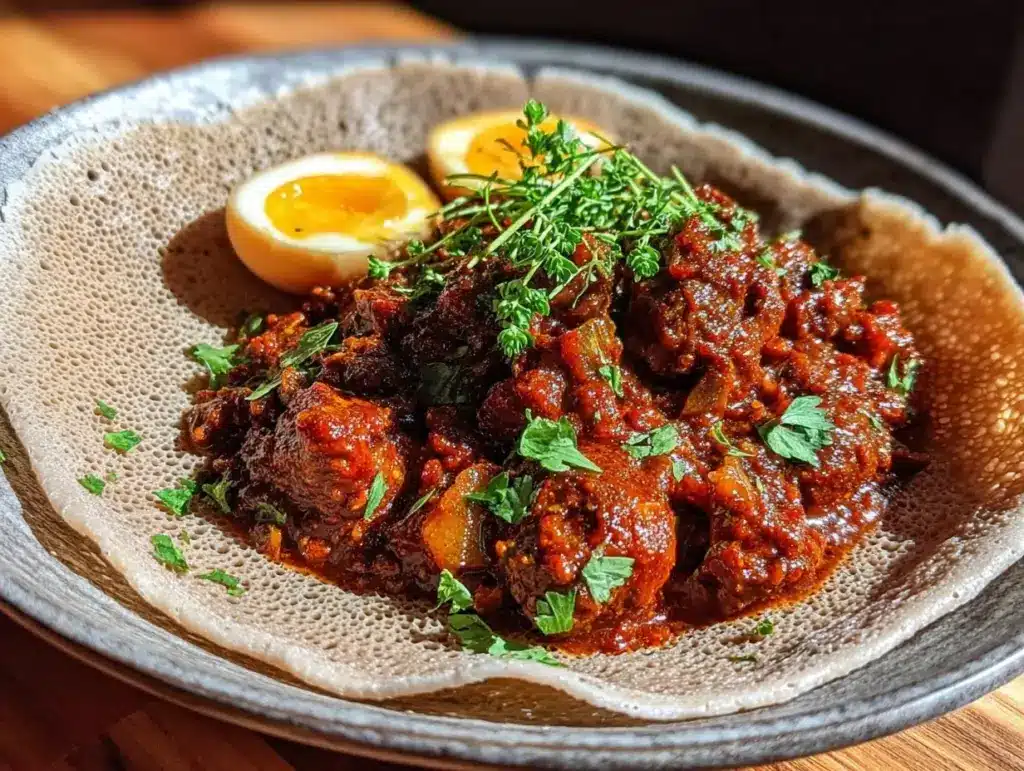
Let me tell you, the warm, tangy aroma of freshly made injera paired with the rich, spicy scent of doro wat bubbling away on the stove is enough to make anyone’s mouth water instantly. The first time I tasted this iconic Ethiopian duo, it was at a friend’s family gathering, and honestly, I was instantly hooked. It was one of those rare moments where you pause, take a deep breath, and just smile because you know you’re onto something truly special. The sour, spongy texture of the injera perfectly soaks up the deep, flavorful stew, creating a harmony of tastes and textures that’s pure, nostalgic comfort.
Years ago, when I was knee-high to a grasshopper, Ethiopian cuisine was a bit of a mystery. But stumbling on this recipe during a rainy weekend cooking experiment changed everything. I wish I’d discovered it years ago because my family couldn’t stop sneaking spoonfuls of doro wat off the stove and stealing pieces of injera off the cooling rack (and I can’t really blame them!). Honestly, this combo is dangerously easy to make and perfect for serving at cozy dinners, potlucks, or whenever you want to impress your crew with something a little different but wildly satisfying.
After testing this recipe multiple times (in the name of research, of course), it’s become a staple for family gatherings and gifting. The kind of meal that feels like a warm hug on a plate—you’re going to want to bookmark this one.
Why You’ll Love This Recipe
This flavorful injera with doro wat recipe has been tested and loved through countless meals, and here’s why it stands out:
- Quick & Easy: Comes together in about 2 hours, including fermentation time for the injera, making it manageable even on a weekend afternoon.
- Simple Ingredients: No need for exotic grocery runs; most spices and ingredients are pantry staples or easily sourced.
- Perfect for Social Gatherings: Whether it’s a family dinner, brunch, or a potluck, this Ethiopian stew and flatbread combo always steals the show.
- Crowd-Pleaser: The rich, spiced chicken stew gets rave reviews from kids and adults alike, even those new to Ethiopian food.
- Unbelievably Delicious: The balance of the tangy injera and robust doro wat is pure comfort food with a soul.
What makes this recipe truly different is the slow caramelization of onions and the artful blend of berbere spice that gifts the doro wat its unmistakable depth. Plus, the injera isn’t just a flatbread; it’s a slightly fermented, airy masterpiece that soaks up all those luscious stew juices. It’s not just food—it’s a whole experience that makes you close your eyes after the first bite and think, “I want this on my table every week.”
This recipe isn’t just good; it’s the kind that turns a simple meal into a memorable celebration of flavor and culture.
What Ingredients You Will Need
This recipe uses simple, wholesome ingredients to deliver bold flavor and satisfying texture without the fuss. Most are pantry staples, and there are easy swaps if needed.
For the Injera Batter
- Teff flour – 2 cups (use light or dark teff, available at specialty or online stores)
- Water – Approximately 3 cups (room temperature, to create a pourable batter)
- Salt – ½ teaspoon (balances the slight sourness)
For the Doro Wat (Ethiopian Chicken Stew)
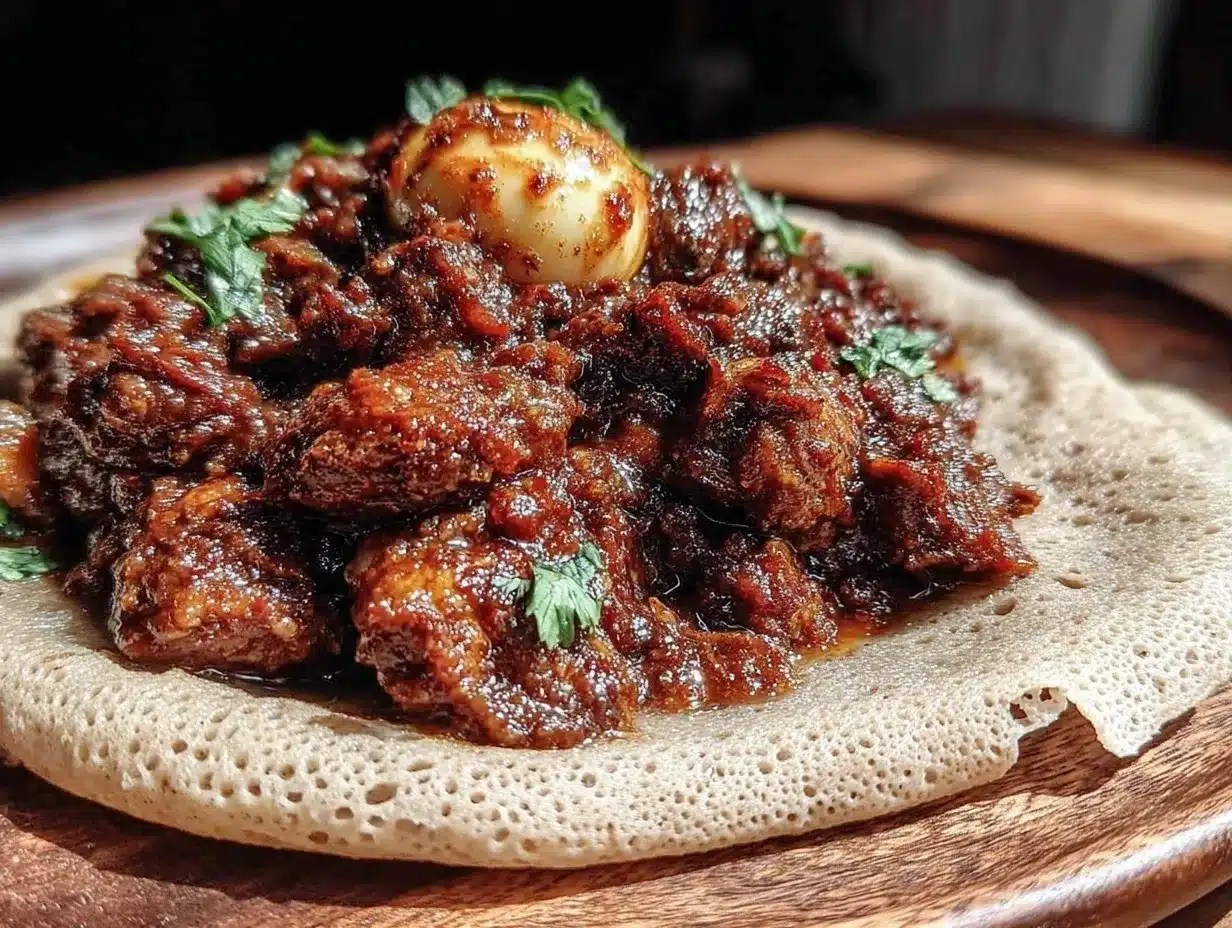
- Chicken drumsticks or thighs – 2 pounds (skin removed for best spice absorption)
- Red onions – 3 large, finely chopped (the base of the stew’s deep flavor)
- Garlic cloves – 4, minced (adds pungent warmth)
- Ginger – 2 tablespoons, grated (fresh for zing)
- Berbere spice blend – 3 tablespoons (key to authentic flavor; see notes below)
- Butter or niter kibbeh – 4 tablespoons (niter kibbeh is spiced clarified butter, but regular unsalted butter works fine)
- Tomato paste – 2 tablespoons (for richness)
- Chicken broth or water – 1 cup (for simmering)
- Hard-boiled eggs – 4 (traditional addition, peeled)
- Salt and black pepper – to taste
Ingredient tips: I recommend Bob’s Red Mill for teff flour if you’re new to it. For berbere, you can find it in most African markets or online; if you want to make your own, it’s a mix of chili peppers, fenugreek, coriander, and more. If you can’t find teff flour, a mix of rice flour and whole wheat can work for injera, but the sour tang won’t be quite the same.
For substitutions, use coconut oil if you want a dairy-free version, and swap chicken broth for vegetable broth for a lighter stew base.
Equipment Needed
- Large mixing bowl – for fermenting injera batter
- Non-stick skillet or cast iron pan – essential for cooking injera evenly
- Heavy-bottomed pot or Dutch oven – for simmering doro wat
- Wooden spoon – perfect for stirring the thick onion mixture without scratching cookware
- Measuring cups and spoons – for precise ingredient amounts
- Fine mesh strainer – optional, for sifting teff flour to avoid lumps
If you don’t have a cast iron skillet, a good-quality non-stick pan works well too. I’ve experimented with electric griddles, but the pan’s heat control makes a big difference for perfect injera texture. For the pot, a heavy-bottomed vessel keeps the heat steady and prevents burning the onions during the slow cooking phase.
Preparation Method
- Prepare the Injera Batter: In a large bowl, whisk together 2 cups (320g) of teff flour with about 3 cups (720ml) of water until smooth but pourable. Cover loosely with a cloth and leave at room temperature to ferment for 24-48 hours. You’ll notice bubbles forming, and the batter will develop a pleasantly sour aroma—this is what makes injera so unique! (If you’re short on time, a partial fermentation of 12 hours still works, just less tangy.)
- Season the Batter: After fermentation, stir in ½ teaspoon of salt. If the batter is too thick, add a splash of water until it reaches the consistency of a thin pancake batter.
- Cook the Injera: Heat a non-stick skillet over medium-high heat until hot but not smoking. Pour about ½ cup (120ml) of batter into the pan, swirling it quickly to form a thin, even layer. Cover the pan with a lid immediately and cook for 2-3 minutes until holes form on the surface and the edges lift slightly. Do not flip injera; it’s cooked only on one side. Remove and place on a clean towel to cool. Repeat with remaining batter.
- Start the Doro Wat Base: In a heavy pot over medium-low heat, melt 4 tablespoons of butter or niter kibbeh. Add the finely chopped red onions (about 3 large) and cook slowly, stirring often, for 30-40 minutes until deeply caramelized and jammy. This step is crucial for the stew’s signature depth.
- Add Aromatics: Stir in 4 minced garlic cloves and 2 tablespoons grated ginger, cooking for 2 more minutes until fragrant.
- Spice It Up: Add 3 tablespoons of berbere spice and stir well, letting the spices toast slightly for about 3 minutes. This step wakes up the flavors.
- Add Tomato Paste & Chicken: Stir in 2 tablespoons tomato paste, then add the chicken pieces, coating them thoroughly with the onion and spice mixture.
- Simmer: Pour in 1 cup (240ml) chicken broth or water, bring to a gentle simmer, cover, and cook for 45 minutes to 1 hour, stirring occasionally, until the chicken is tender and the sauce thickened.
- Add Hard-Boiled Eggs: About 10 minutes before the stew finishes, add peeled hard-boiled eggs to the pot to soak up the flavors.
- Season to Taste: Add salt and black pepper as needed. The stew should be rich, spicy, and deeply satisfying.
- Serve: Arrange injera on a large platter, spoon the doro wat and eggs on top, and enjoy communal-style, tearing off injera pieces to scoop up the stew.
Cooking Tips & Techniques
Getting injera just right can seem a bit tricky at first, but here’s what I’ve learned over the years. First, patience is key with the fermentation—don’t rush it, as that sour tang is non-negotiable for authenticity. When cooking, make sure your pan is hot enough; too cool and you won’t get those signature holes, too hot and the injera burns before cooking through.
For the doro wat, slow-cooking the onions is the real secret weapon. I once tried speeding this step up and ended with a stew that lacked depth—it’s worth the wait. Also, stirring often and using a heavy-bottomed pot helps prevent burning and encourages that rich, dark sauce.
Multitasking works well here: while the onions caramelize, prep your chicken and hard-boil eggs. Lastly, don’t skip adding the eggs; they soak in the flavors and add a lovely texture contrast.
Variations & Adaptations
Want to mix things up? Here are a few ways to customize your flavorful injera with doro wat:
- Vegetarian Version: Replace chicken with hearty vegetables like mushrooms, potatoes, and carrots simmered in the same berbere-spiced sauce.
- Gluten-Free Injera: Use 100% teff flour or blend teff with sorghum flour for a gluten-free batter. The texture may differ slightly but remains delicious.
- Milder Stew: Cut back on the berbere spice if you prefer less heat, or add a touch of honey to balance the spice.
- Slow Cooker Adaptation: After caramelizing onions, transfer everything to a slow cooker and cook on low for 4-5 hours.
- Personal Touch: I once added a splash of red wine to the stew for a deeper flavor—totally worth trying if you’re feeling adventurous.
Serving & Storage Suggestions
Serve the injera warm or at room temperature, arranged on a large platter. Spoon the doro wat generously over the injera, and don’t be shy about tearing off big chunks to scoop up the stew—that’s the Ethiopian way! Pair with a simple side of sautéed greens or lentils for a full meal.
Leftovers keep well in the fridge for up to 3 days. Store the doro wat separately from the injera to prevent sogginess. When reheating, gently warm the stew on the stovetop and wrap the injera in foil, warming it in a low oven or microwave with a damp paper towel to keep it pliable.
Flavors often deepen after a day or two, so if you have patience, leftovers can taste even better. Just make sure to enjoy within a few days for best texture and freshness.
Nutritional Information & Benefits
This flavorful injera with doro wat recipe is balanced and nourishing. Injera, made from teff flour, is high in fiber, protein, and iron, making it a great gluten-free grain option. The doro wat provides a solid dose of protein from chicken and eggs, plus antioxidants and anti-inflammatory benefits from the garlic, ginger, and berbere spices.
Per serving, expect around 500-600 calories, with a good balance of protein, carbs, and fats. It’s naturally gluten-free if you use 100% teff injera and can be adapted for dairy-free diets by swapping butter for oil. Just be mindful of the spice level if cooking for kids or sensitive palates.
Conclusion
This flavorful injera with doro wat recipe is a must-try for anyone craving authentic Ethiopian stew without the fuss. It’s comforting, richly spiced, and surprisingly approachable for home cooks. Whether you’re feeding family or impressing friends, this dish brings warmth and a bit of culinary adventure to your table.
Honestly, I love this recipe because it turns simple ingredients into something memorable and soulful. I hope you’ll give it a try, tweak it to your liking, and make it your own. Don’t forget to share your experiences or any fun twists you come up with—I’d love to hear all about it!
Now, roll up your sleeves and get cooking—you won’t regret it.
FAQs
What is injera made from?
Injera is traditionally made from teff flour, a tiny grain native to Ethiopia. It’s fermented to develop a slightly sour, spongy flatbread perfect for soaking up stews.
Can I make injera without teff flour?
You can substitute teff with a blend of rice and whole wheat flour, but the flavor and texture won’t be quite the same. Teff is key for that authentic tang and softness.
What is berbere spice?
Berbere is a vibrant Ethiopian spice blend made from chili peppers, garlic, ginger, fenugreek, and other spices. It’s essential for the bold, complex flavor of doro wat.
Can I prepare doro wat in advance?
Absolutely! Doro wat tastes even better the next day as the flavors meld. Just store the stew and injera separately and reheat gently.
Is doro wat very spicy?
It can be, depending on how much berbere you use. You can adjust the spice level to your taste by using less berbere or adding a touch of sweetness to balance the heat.
Pin This Recipe!
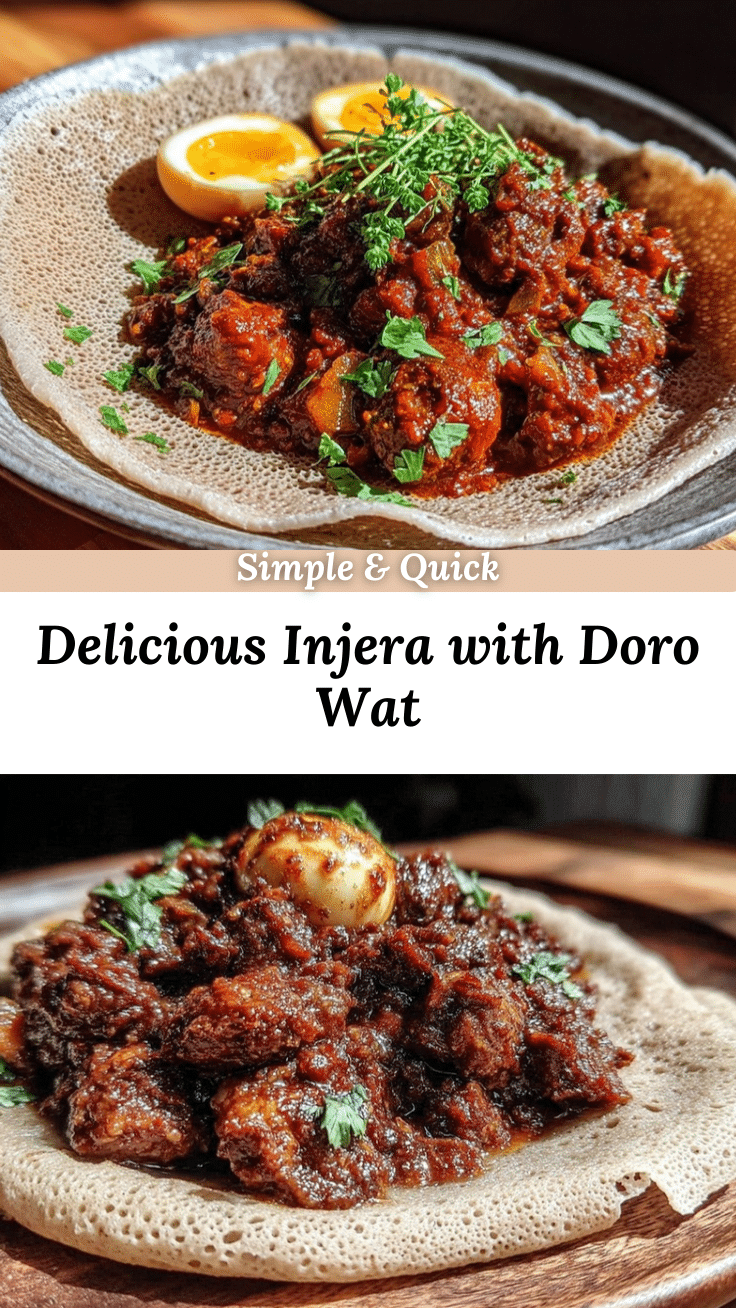
Flavorful Injera with Doro Wat Recipe Easy Authentic Ethiopian Stew Guide
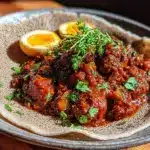
This recipe features traditional Ethiopian injera, a slightly fermented flatbread, paired with doro wat, a rich and spicy chicken stew. Together, they create a comforting and authentic meal perfect for family gatherings and special occasions.
- Prep Time: 15 minutes (plus 24-48 hours fermentation)
- Cook Time: 1 hour 15 minutes
- Total Time: Approximately 2 hours (including fermentation time)
- Yield: 6 servings 1x
- Category: Main Course
- Cuisine: Ethiopian
Ingredients
- 2 cups teff flour (light or dark)
- Approximately 3 cups water (room temperature)
- ½ teaspoon salt
- 2 pounds chicken drumsticks or thighs (skin removed)
- 3 large red onions, finely chopped
- 4 garlic cloves, minced
- 2 tablespoons grated fresh ginger
- 3 tablespoons berbere spice blend
- 4 tablespoons butter or niter kibbeh (spiced clarified butter)
- 2 tablespoons tomato paste
- 1 cup chicken broth or water
- 4 hard-boiled eggs, peeled
- Salt and black pepper to taste
Instructions
- Prepare the Injera Batter: In a large bowl, whisk together 2 cups (320g) of teff flour with about 3 cups (720ml) of water until smooth but pourable. Cover loosely with a cloth and leave at room temperature to ferment for 24-48 hours until bubbles form and a sour aroma develops. (Partial fermentation of 12 hours works with less tang.)
- Season the Batter: After fermentation, stir in ½ teaspoon of salt. If the batter is too thick, add a splash of water until it reaches the consistency of a thin pancake batter.
- Cook the Injera: Heat a non-stick skillet over medium-high heat until hot but not smoking. Pour about ½ cup (120ml) of batter into the pan, swirling quickly to form a thin, even layer. Cover immediately and cook for 2-3 minutes until holes form on the surface and edges lift slightly. Do not flip. Remove and cool on a clean towel. Repeat with remaining batter.
- Start the Doro Wat Base: In a heavy pot over medium-low heat, melt 4 tablespoons of butter or niter kibbeh. Add the finely chopped red onions and cook slowly, stirring often, for 30-40 minutes until deeply caramelized and jammy.
- Add Aromatics: Stir in 4 minced garlic cloves and 2 tablespoons grated ginger, cooking for 2 more minutes until fragrant.
- Spice It Up: Add 3 tablespoons of berbere spice and stir well, toasting the spices for about 3 minutes.
- Add Tomato Paste & Chicken: Stir in 2 tablespoons tomato paste, then add the chicken pieces, coating thoroughly with the onion and spice mixture.
- Simmer: Pour in 1 cup (240ml) chicken broth or water, bring to a gentle simmer, cover, and cook for 45 minutes to 1 hour, stirring occasionally, until chicken is tender and sauce thickened.
- Add Hard-Boiled Eggs: About 10 minutes before the stew finishes, add peeled hard-boiled eggs to soak up flavors.
- Season to Taste: Add salt and black pepper as needed.
- Serve: Arrange injera on a large platter, spoon doro wat and eggs on top, and enjoy communal-style by tearing injera pieces to scoop up the stew.
Notes
Patience is key for injera fermentation to develop authentic sourness. Slow caramelization of onions is essential for deep stew flavor. Use a hot pan for injera to get signature holes without burning. For dairy-free, substitute butter with coconut oil. Store stew and injera separately to avoid sogginess. Leftovers taste better after a day or two and keep up to 3 days refrigerated.
Nutrition
- Serving Size: 1 serving (approx. 1
- Calories: 550
- Sugar: 6
- Sodium: 600
- Fat: 25
- Saturated Fat: 10
- Carbohydrates: 45
- Fiber: 6
- Protein: 40
Keywords: Injera, Doro Wat, Ethiopian stew, Ethiopian cuisine, teff flour, berbere spice, chicken stew, fermented flatbread, authentic Ethiopian recipe