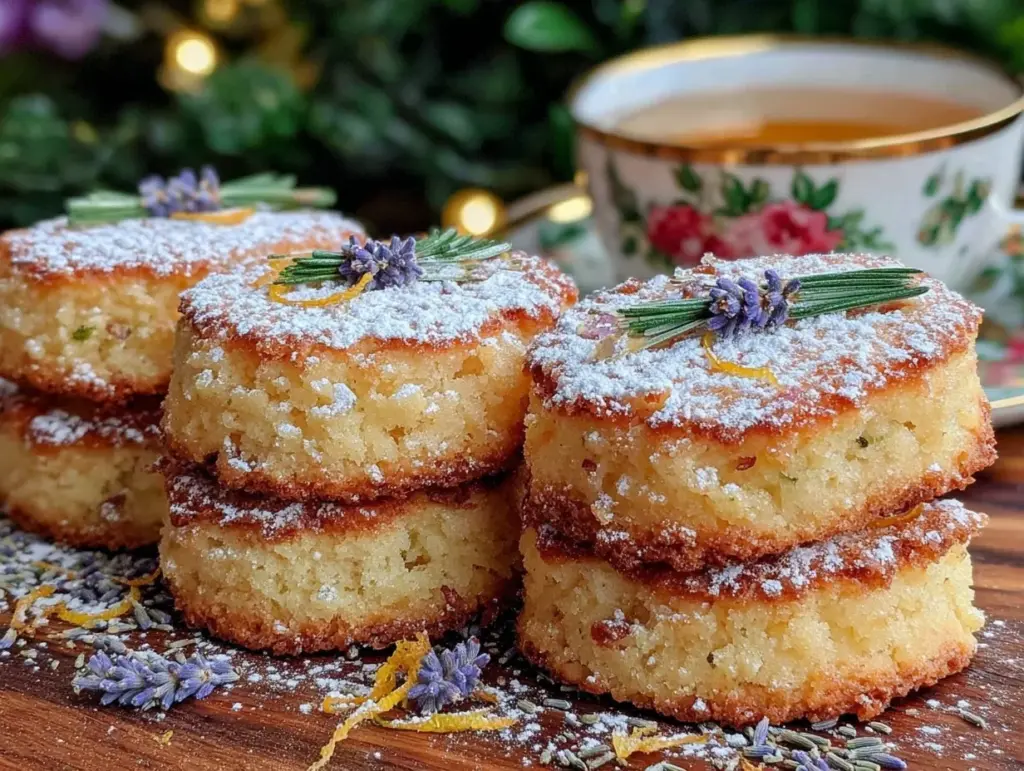
“I never thought a casual chat with my florist would lead me to the best lemon lavender tea cakes I’ve ever tasted,” I confessed to my friend last week over a cup of chamomile tea. It was a chilly Thursday afternoon when I bumped into Marie, the cheerful lady who runs the flower stand at the neighborhood farmers’ market. She was unpacking bunches of fresh lavender, and as we chatted, she casually mentioned her grandmother’s old recipe for lemon lavender tea cakes. Honestly, I was skeptical at first—lavender in a cake? But, you know that moment when curiosity sneaks up on you? Well, I scribbled down her notes on a napkin (of course, I spilled some coffee in the process), and that very evening, I whipped up a batch.
The first bite? Pure delight. The cake was light, almost cloud-like, with just the right zing of lemon and a subtle, floral hint of lavender that danced on the tongue. It wasn’t too sweet or overpowering—just perfect. Maybe you’ve been there, craving something fresh and comforting but not too heavy. These tea cakes fit that mood perfectly. Plus, they’re surprisingly easy to make, even if you’re not a seasoned baker.
Since that day, I’ve made these lemon lavender tea cakes more times than I can count—sometimes for a quiet morning treat, other times as a sweet surprise for guests. They’ve become my little culinary secret, a gentle reminder of how unexpected moments can bring the sweetest rewards. Let me tell you, once you try these, you’ll find yourself reaching for them whenever you want a slice of sunshine with a floral twist.
Why You’ll Love This Recipe
Honestly, these lemon lavender tea cakes are a game changer, and I’m not just saying that because Marie’s napkin was nearly illegible the first time I tried. After a dozen or so tweaks, I landed on a recipe that’s:
- Quick & Easy: Ready to bake in under 30 minutes, perfect for those unexpected sweet cravings or last-minute tea parties.
- Simple Ingredients: No need for fancy or hard-to-find items—most of these are pantry staples, plus a touch of dried culinary lavender.
- Perfect for Cozy Gatherings: Whether it’s a weekend brunch or a quiet afternoon with friends, these cakes bring warmth and charm to the table.
- Crowd-Pleaser: The balance of lemon’s brightness and lavender’s floral notes surprises even skeptics, making it a hit with both kids and adults.
- Unbelievably Delicious: The texture is light, almost fluffy, with a tender crumb that melts in your mouth—definitely not your average tea cake.
What sets this recipe apart? It’s the gentle folding technique that keeps the batter airy, alongside the subtle infusion of lavender that’s never overpowering. I’ve tested this recipe in my kitchen multiple times (yes, with a bit of flour on the counter and a timer that occasionally betrayed me), and each batch has that magical balance of flavors. Plus, the lemon zest and juice are fresh—not bottled—giving it a zestiness that wakes up your taste buds.
In short, this isn’t just another lemon cake. It’s a little celebration in cake form, perfect for those moments when you want something special without the fuss.
What Ingredients You Will Need
This recipe uses simple, wholesome ingredients to deliver bold flavor and a satisfying, light texture without too much fuss. Most of these should be easy to find, and I’ll share some handy swaps along the way.
- All-purpose flour: 1 ½ cups (190 g) – provides structure; sifted for best fluffiness.
- Baking powder: 1 ½ teaspoons – helps the cakes rise beautifully.
- Salt: ¼ teaspoon – balances the sweetness and enhances flavors.
- Unsalted butter: ½ cup (115 g), softened – adds richness without overwhelming the delicate flavors.
- Granulated sugar: ¾ cup (150 g) – gives the perfect touch of sweetness; I love using C&H Sugar for consistent results.
- Large eggs: 2, room temperature – bind everything together smoothly.
- Fresh lemon zest: From 2 medium lemons – brings that bright, fresh citrus punch.
- Fresh lemon juice: 3 tablespoons – adds tang and moisture; avoid bottled if you can.
- Whole milk: ½ cup (120 ml), room temperature – keeps the batter tender; can swap for almond milk for dairy-free.
- Dried culinary lavender buds: 2 teaspoons – the star floral note; make sure it’s food-grade to avoid bitterness.
- Vanilla extract: 1 teaspoon – rounds out the flavors beautifully.
Substitution tips: If you’re gluten-free, try using a 1:1 gluten-free baking flour blend. For a vegan twist, swap butter for coconut oil and eggs with flax eggs (2 tablespoons ground flaxseed mixed with 6 tablespoons water, chilled). Just remember, texture may vary slightly, but the lemon and lavender flavors still shine through.
Equipment Needed
- Mixing bowls: At least two—one for dry, one for wet ingredients. Glass or stainless steel works well.
- Electric mixer or stand mixer: Helpful for creaming butter and sugar, but a sturdy whisk works if you prefer manual.
- Measuring cups and spoons: For precise ingredient amounts; I recommend using a digital kitchen scale for the flour and sugar for best accuracy.
- Zester or microplane: To get fine lemon zest without the bitter white pith.
- Whisk and spatula: Essential for folding in ingredients gently and evenly.
- Muffin tin or small cake pans: I use a 6-cup muffin tin or two 4-inch round pans; grease or line with parchment paper.
- Cooling rack: To let cakes cool without getting soggy on the bottom.
If you don’t have a mixer, no worries—creaming by hand takes a bit more elbow grease, but it’s totally doable. For zesting, a box grater’s fine if you don’t have a microplane, just watch out for the pith!
Preparation Method
- Preheat and prep: Set your oven to 350°F (175°C). Grease your muffin tin or line with cupcake liners. This step saves you headaches later when the cakes stick.
- Mix dry ingredients: In a medium bowl, sift together 1 ½ cups (190 g) flour, 1 ½ teaspoons baking powder, and ¼ teaspoon salt. Sifting helps avoid clumps and keeps the batter airy.
- Cream butter and sugar: In a large bowl, beat ½ cup (115 g) softened unsalted butter with ¾ cup (150 g) granulated sugar on medium speed until pale and fluffy, about 3-4 minutes. This usually takes longer than you think, but it’s key for light cakes.
- Add eggs: Beat in the eggs, one at a time, ensuring each is fully incorporated before adding the next to prevent curdling. Scrape down the sides as needed.
- Flavor base: Stir in 2 teaspoons dried lavender buds, 1 teaspoon vanilla extract, zest from 2 lemons, and 3 tablespoons fresh lemon juice. The batter will smell heavenly here—like a garden in spring.
- Alternate adding dry ingredients and milk: Add the dry ingredients in three parts, alternating with ½ cup (120 ml) room temperature milk, beginning and ending with the dry. Mix on low speed just until combined. Overmixing can make the cake dense, so stop once you see no flour streaks.
- Portion and bake: Spoon batter evenly into prepared pans, filling about 2/3 full to allow space for rising. Bake for 18-22 minutes, or until a toothpick inserted in the center comes out clean. Around minute 15, peek through the oven window—you want a golden top that springs back when pressed gently.
- Cool: Let the cakes rest in the tin for 5 minutes, then transfer to a wire rack to cool completely. This keeps the bottoms from getting soggy and helps preserve that fluffiness.
Pro tip: If you forget to bring eggs or milk to room temperature (been there!), pop them in a bowl of warm water for 5 minutes to avoid a lumpy batter. Also, don’t skip the sifting step—it makes a noticeable difference in the crumb.
Cooking Tips & Techniques
Getting that light and fluffy texture takes a bit more than just throwing ingredients together. Here are some tips I’ve picked up from both happy accidents and occasional flops:
- Don’t rush creaming butter and sugar: This step traps air, which makes the cakes rise beautifully. When I first tried this, I was impatient and the texture was dense—lesson learned!
- Handle lavender carefully: Too much, or using non-culinary lavender, can lead to a bitter taste. Stick to food-grade lavender and measure precisely.
- Fold gently: After adding dry ingredients, mix just until combined. Overmixing develops gluten, resulting in a tough cake instead of a tender one.
- Room temperature ingredients: This really helps batter blend smoothly and traps air better. I keep eggs and milk out for about 30 minutes before starting.
- Watch baking times: Ovens vary, so start checking at 18 minutes. Overbaking dries the cakes out.
- Multitasking: While the cakes bake, clean your bowls and utensils—it saves time and keeps your workspace neat for the glaze or topping.
Variations & Adaptations
If you want to mix things up or cater to different preferences, these variations are worth trying:
- Gluten-Free Version: Swap all-purpose flour with a gluten-free blend like Bob’s Red Mill 1:1 flour. Add a teaspoon of xanthan gum if your blend doesn’t contain it for better texture.
- Herbal Twist: Replace lavender with 1 tablespoon of dried rosemary or thyme for a savory edge that pairs beautifully with lemon.
- Chocolate Lavender: Add ¼ cup (25 g) of cocoa powder to the dry ingredients and top with a light dusting of powdered sugar or a simple chocolate glaze.
- Dairy-Free Substitute: Use coconut oil in place of butter and almond or oat milk instead of whole milk. The flavor will be slightly different but still delightful.
- Seasonal Fruit Addition: Fold in ½ cup fresh blueberries or raspberries for a burst of fruity goodness. Just toss them in a bit of flour before adding to the batter to prevent sinking.
One personal favorite is adding a drizzle of honey glaze infused with a hint of lavender after baking—makes these tea cakes feel like a fancy treat without much extra work!
Serving & Storage Suggestions
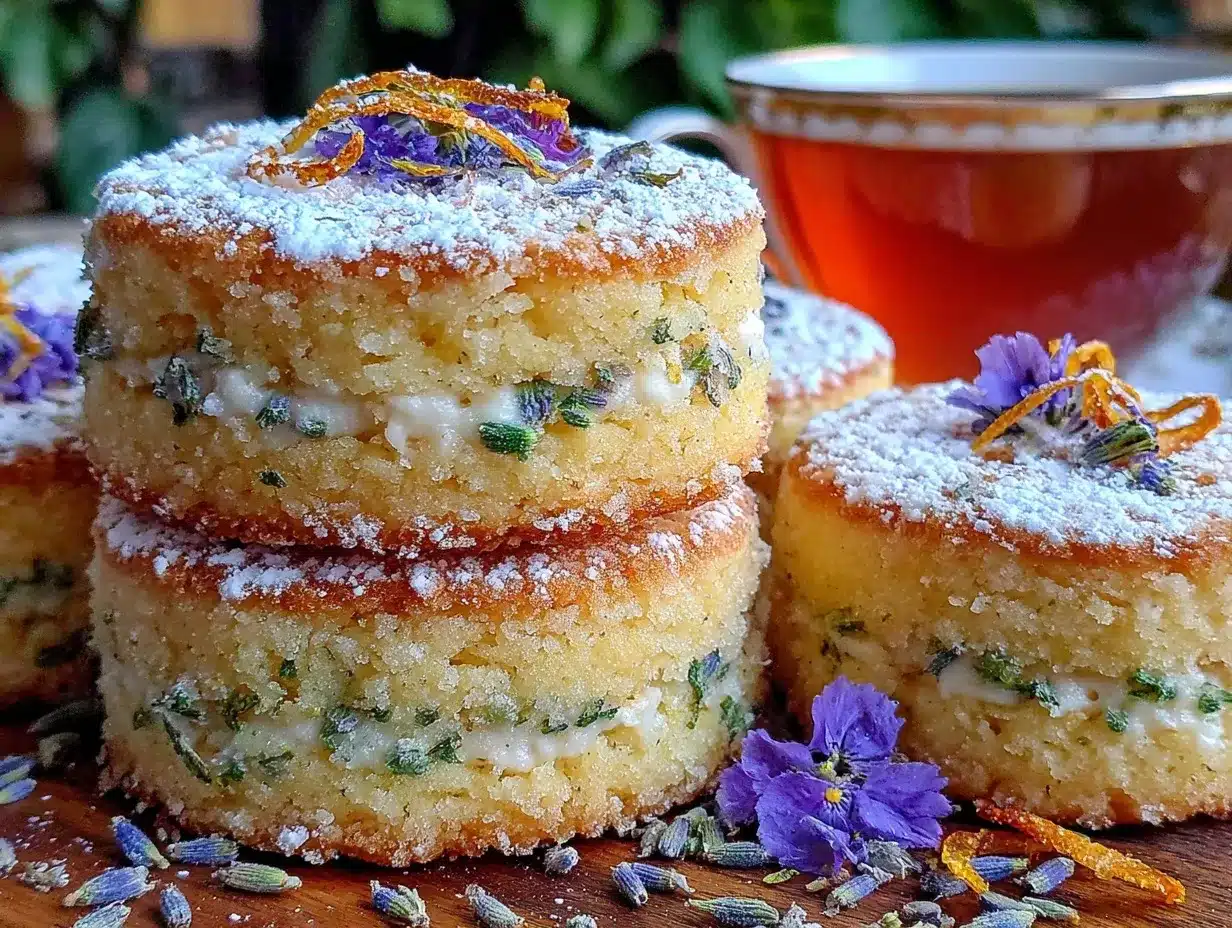
These lemon lavender tea cakes are best served slightly warm or at room temperature. I like to slice them in half horizontally and spread a thin layer of whipped cream or clotted cream—this adds a lovely richness that contrasts with the light cake.
Pairing suggestions include a cup of Earl Grey or a light green tea, which complements the floral notes beautifully. If you’re serving these at a gathering, fresh berries on the side add a splash of color and freshness.
For storage, keep the cakes in an airtight container at room temperature for up to 2 days. If you want to save them longer, freeze wrapped tightly for up to 3 months. To reheat, thaw overnight in the fridge and warm gently in a low oven (about 300°F/150°C) for 5-7 minutes to bring back that just-baked softness.
Flavors tend to mellow and deepen a bit after a day, so if you make them ahead, they actually taste even better the next day—kind of like a little secret bonus.
Nutritional Information & Benefits
Each lemon lavender tea cake (assuming 6 servings) roughly contains:
| Calories | 220 |
|---|---|
| Fat | 11g |
| Carbohydrates | 28g |
| Protein | 3g |
| Sugar | 16g |
This recipe provides a modest amount of fat from butter and a good dose of vitamin C from fresh lemon juice and zest. Lavender, while used sparingly, is known for its calming and digestive benefits, making these cakes a gentle treat both for your palate and your wellbeing.
For those watching gluten, the gluten-free option keeps the indulgence accessible. Just keep in mind the eggs and butter make this unsuitable for strict vegan diets unless substitutions are made.
Conclusion
Whether you’re a baking novice or someone who just appreciates a good slice with your afternoon tea, these light and fluffy lemon lavender tea cakes are worth a spot in your recipe collection. They bring together simplicity and elegance with flavors that feel both fresh and comforting. I love how adaptable they are, and honestly, they remind me that sometimes the best recipes come from the most unexpected conversations (like the one with my florist friend!).
Give this recipe a try and make it your own—maybe add a personal twist or share it at your next gathering. I’d love to hear how you customize it or what memories it stirs up for you, so don’t be shy about dropping a comment or sharing your photos. Happy baking and enjoy every fragrant, zesty bite!
FAQs
Can I use fresh lavender instead of dried?
Fresh lavender can be used, but use about double the amount since it’s less concentrated. Make sure it’s culinary-grade and trim off the stems to avoid bitterness.
How do I prevent the lavender flavor from being too strong?
Stick to the recommended 2 teaspoons of dried culinary lavender buds. Crushing them slightly before adding helps release flavor without overpowering the cake.
Can I make these tea cakes in a loaf pan instead of muffin tins?
Yes! Bake at the same temperature but increase the time to about 40-45 minutes. Check doneness by inserting a toothpick in the center.
What’s the best way to zest lemons without bitterness?
Use a microplane or fine grater, and only grate the yellow outer skin, avoiding the white pith underneath, which is bitter.
Can I prepare the batter ahead of time?
It’s best to bake immediately after mixing for optimal rise and texture, but you can refrigerate the batter for up to 2 hours. Let it come to room temperature before baking.
Pin This Recipe!
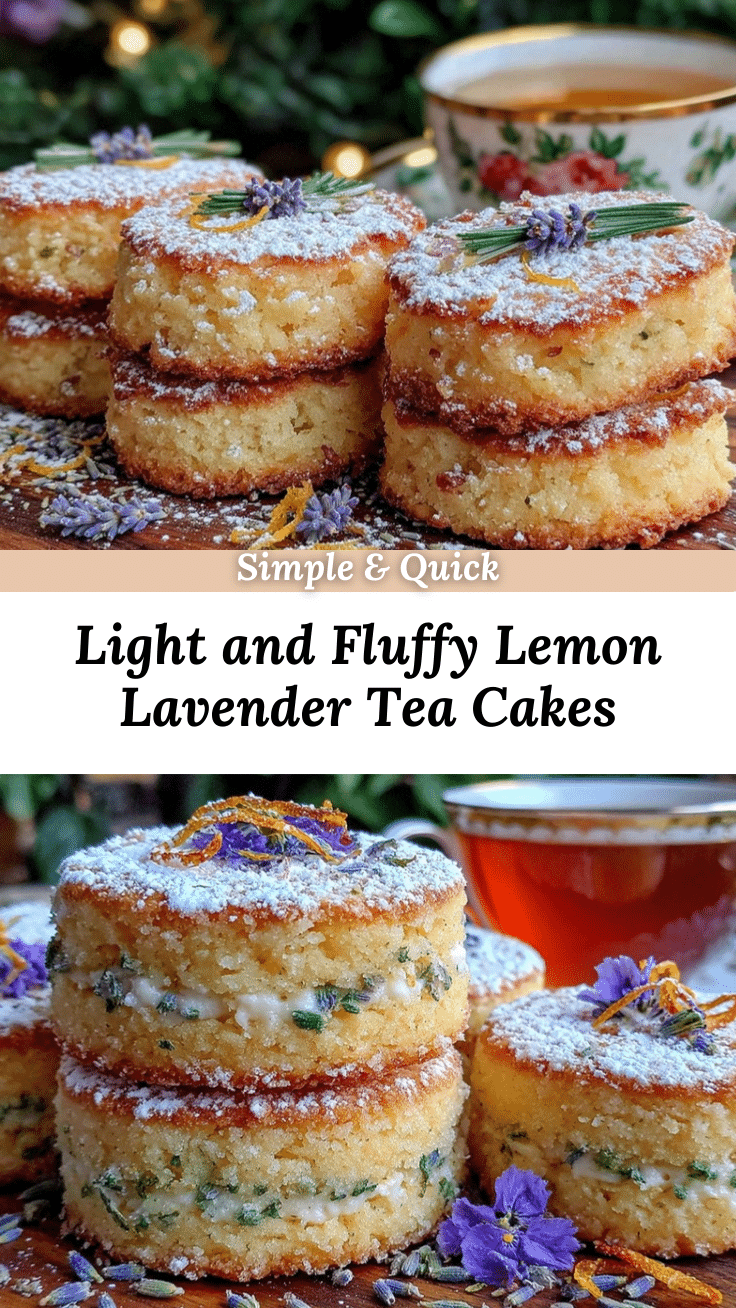
Light and Fluffy Lemon Lavender Tea Cakes
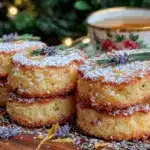
These lemon lavender tea cakes are light, fluffy, and infused with fresh lemon zest and culinary lavender for a delicate floral twist. Perfect for cozy gatherings or a sweet treat with tea.
- Prep Time: 15 minutes
- Cook Time: 20 minutes
- Total Time: 35 minutes
- Yield: 6 servings 1x
- Category: Dessert
- Cuisine: American
Ingredients
- 1 ½ cups (190 g) all-purpose flour, sifted
- 1 ½ teaspoons baking powder
- ¼ teaspoon salt
- ½ cup (115 g) unsalted butter, softened
- ¾ cup (150 g) granulated sugar
- 2 large eggs, room temperature
- Zest of 2 medium lemons
- 3 tablespoons fresh lemon juice
- ½ cup (120 ml) whole milk, room temperature
- 2 teaspoons dried culinary lavender buds
- 1 teaspoon vanilla extract
Instructions
- Preheat oven to 350°F (175°C). Grease muffin tin or line with cupcake liners.
- In a medium bowl, sift together flour, baking powder, and salt.
- In a large bowl, beat softened butter and sugar on medium speed until pale and fluffy, about 3-4 minutes.
- Beat in eggs one at a time, fully incorporating each before adding the next. Scrape down sides as needed.
- Stir in dried lavender buds, vanilla extract, lemon zest, and lemon juice.
- Add dry ingredients in three parts, alternating with milk, beginning and ending with dry ingredients. Mix on low speed just until combined; do not overmix.
- Spoon batter evenly into prepared pans, filling about 2/3 full.
- Bake for 18-22 minutes or until a toothpick inserted in the center comes out clean. Check at 15 minutes for a golden top that springs back when pressed.
- Let cakes rest in the tin for 5 minutes, then transfer to a wire rack to cool completely.
Notes
Use food-grade culinary lavender to avoid bitterness. Bring eggs and milk to room temperature for best results. Do not overmix batter to keep cakes light and fluffy. For gluten-free, substitute with 1:1 gluten-free flour blend and add xanthan gum if needed. Vegan substitutions include coconut oil for butter and flax eggs for eggs.
Nutrition
- Serving Size: 1 tea cake
- Calories: 220
- Sugar: 16
- Fat: 11
- Carbohydrates: 28
- Protein: 3
Keywords: lemon lavender tea cakes, lemon cake, lavender cake, tea cakes, easy baking, floral dessert, homemade tea cakes